




FAQ's
Why is my image still larger than 450 KB after compression?
Some images contain a large amount of visual data, making them harder to reduce to a strict file-size limit. Photos with high resolution, textures, and many colors may require more reduction than simpler images. If the result remains above 450 KB, resizing or using a different format may help.
Can a 10 MB image really be reduced to 450 KB?
It is possible, but reducing a 10 MB image to 450 KB requires a substantial reduction in file data. The resulting appearance depends on the image and the amount of compression needed. Detailed photographs are more likely to show noticeable changes than simple graphics.
Why does my image look worse after reducing it to 450 KB?
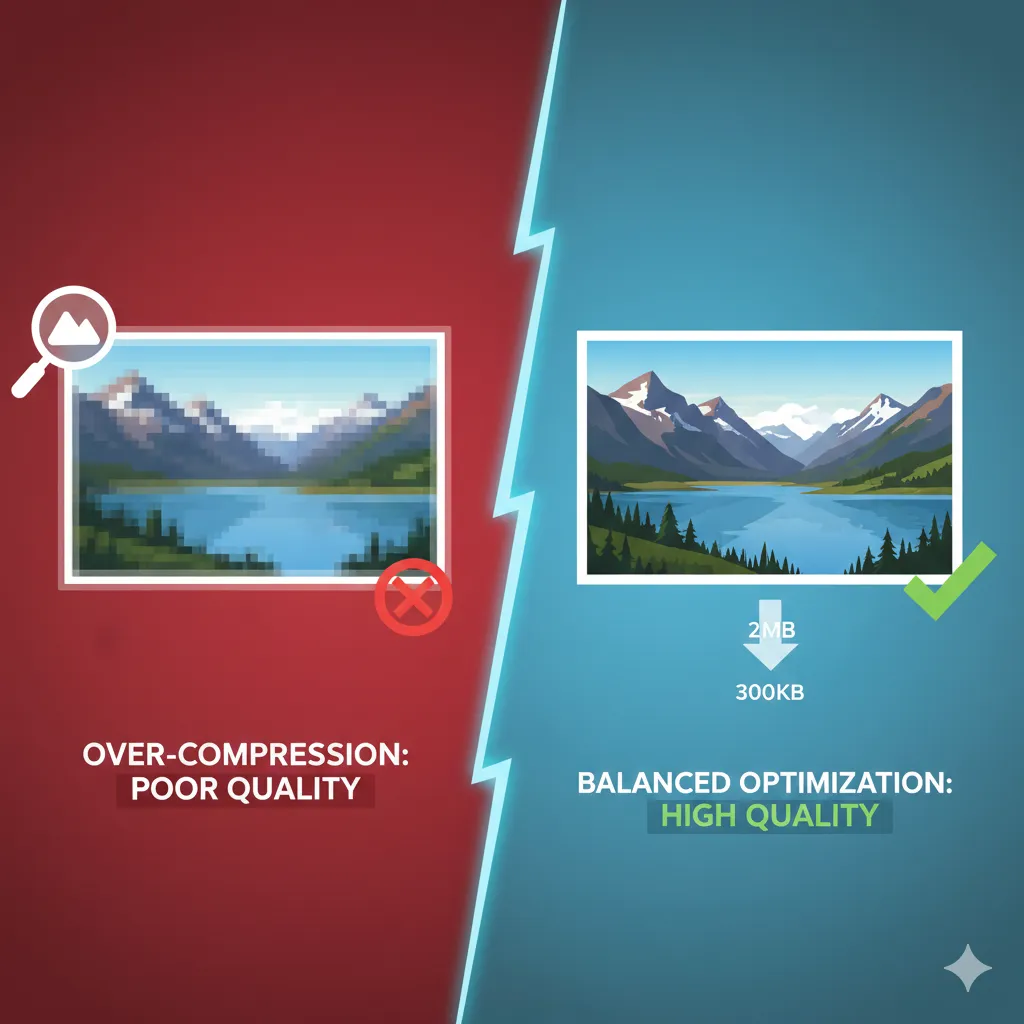
A strict file-size target can require compression that removes some visual information from the original. This may affect fine textures, sharp edges, or small details. Compare the compressed version with the original before deciding whether the result is suitable.
Does resizing help when compression alone cannot reach 450 KB?
Yes. Reducing the pixel dimensions decreases the amount of image data that needs to be stored, which can make it easier to reach 450 KB. This is particularly useful when the original image is much larger than the dimensions actually needed.
Why does image content affect how easily it reaches 450 KB?
A photograph containing textures, foliage, people, or complex backgrounds generally contains more information than a simple graphic. More information can make aggressive size reduction harder. This is why the same compression approach can produce different file sizes for different images.
Should I resize an image before trying to reach 450 KB?
If the image is much larger in dimensions than required, resizing first can reduce the amount of data that needs to be compressed. This can help preserve more visual quality than relying entirely on aggressive compression. If the dimensions are already appropriate, compression alone may be sufficient.
What image format is suitable for a 450 KB target?
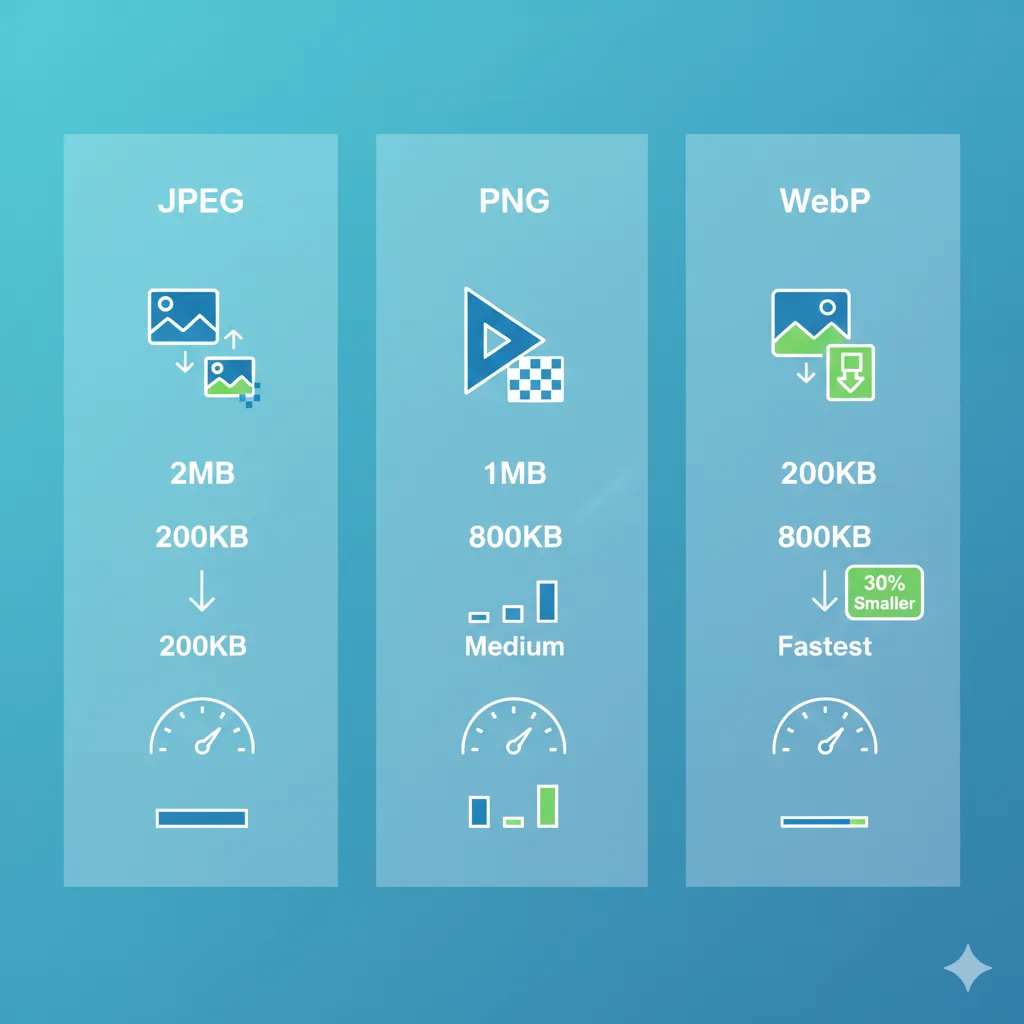
JPG/JPEG is commonly suitable for photographs because it can produce relatively small files. WebP can also provide efficient compression where supported, while PNG is often more appropriate for graphics requiring transparency or certain types of sharp artwork. The best choice depends on the image and the requirements of the destination.
Why does text become difficult to read after compression?
Small text and fine lines contain details that can be affected when an image is compressed heavily. This is particularly noticeable in screenshots, scanned documents, charts, and text-based graphics. If readability is important, inspect the compressed image closely rather than judging only by its file size.
What if my image is only slightly above 450 KB?
A small reduction may be enough when the original is already close to the limit. In this situation, you may not need aggressive compression or major dimension changes. Making a modest adjustment can help reduce the file size while retaining more of the original appearance.
Can I compress the same image again to reach 450 KB?
The tool is intended to work with images that are above the 450 KB target. Once an image has already been compressed, using the compressed version again will not yield any result.
Does 450 KB mean the final image must be exactly 450 KB?
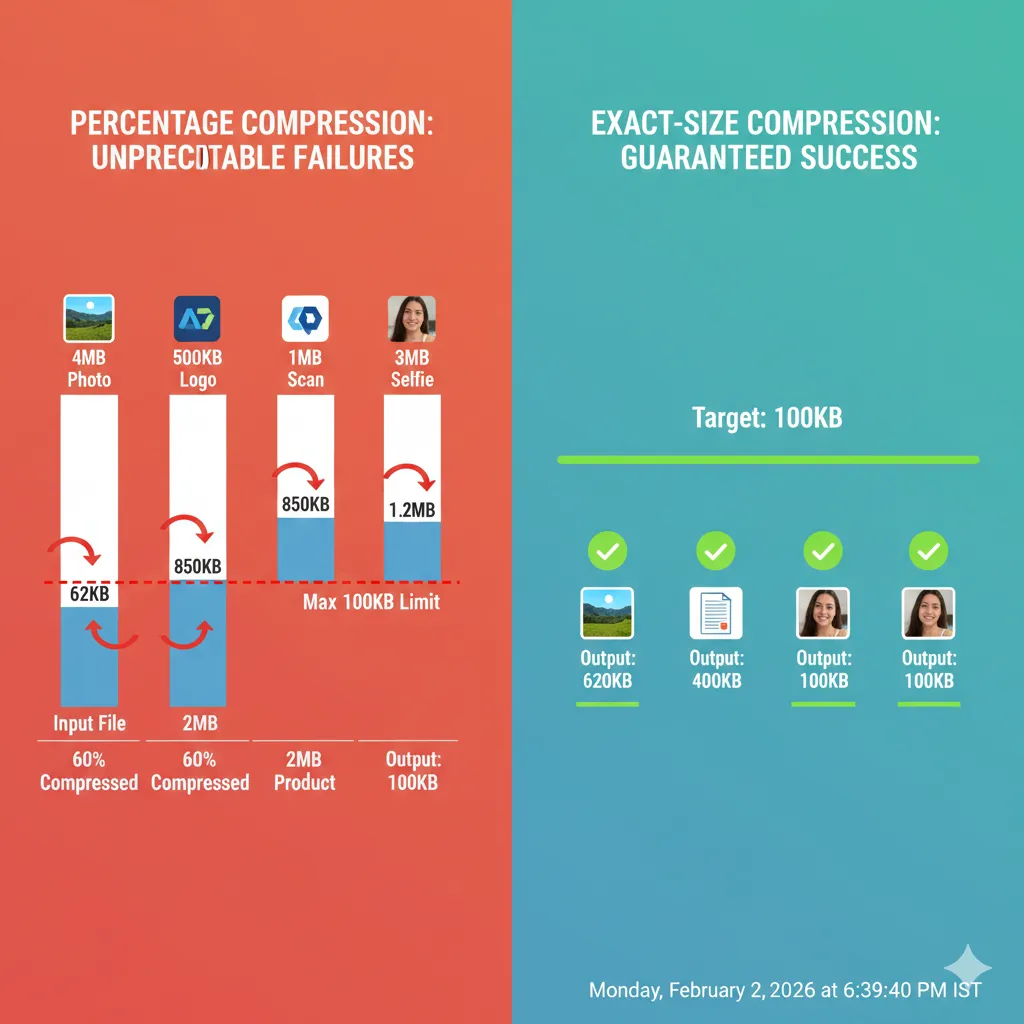
No. A 450 KB maximum means the file needs to be at or below that limit; it does not necessarily need to be exactly 450 KB. A resulting file that is 430 KB or 390 KB can still satisfy a 450 KB maximum, provided the destination accepts the format and dimensions.